


Law firm website design for Legal Services Board

A legal services website designed and built to meet WCAG 2.1 AA accessibility standards

Client: Legal Services Board

Completed: June 2019

Silhouettes of people seated by a large window overlooking the London skyline
Legal Services Board logo on a purple background
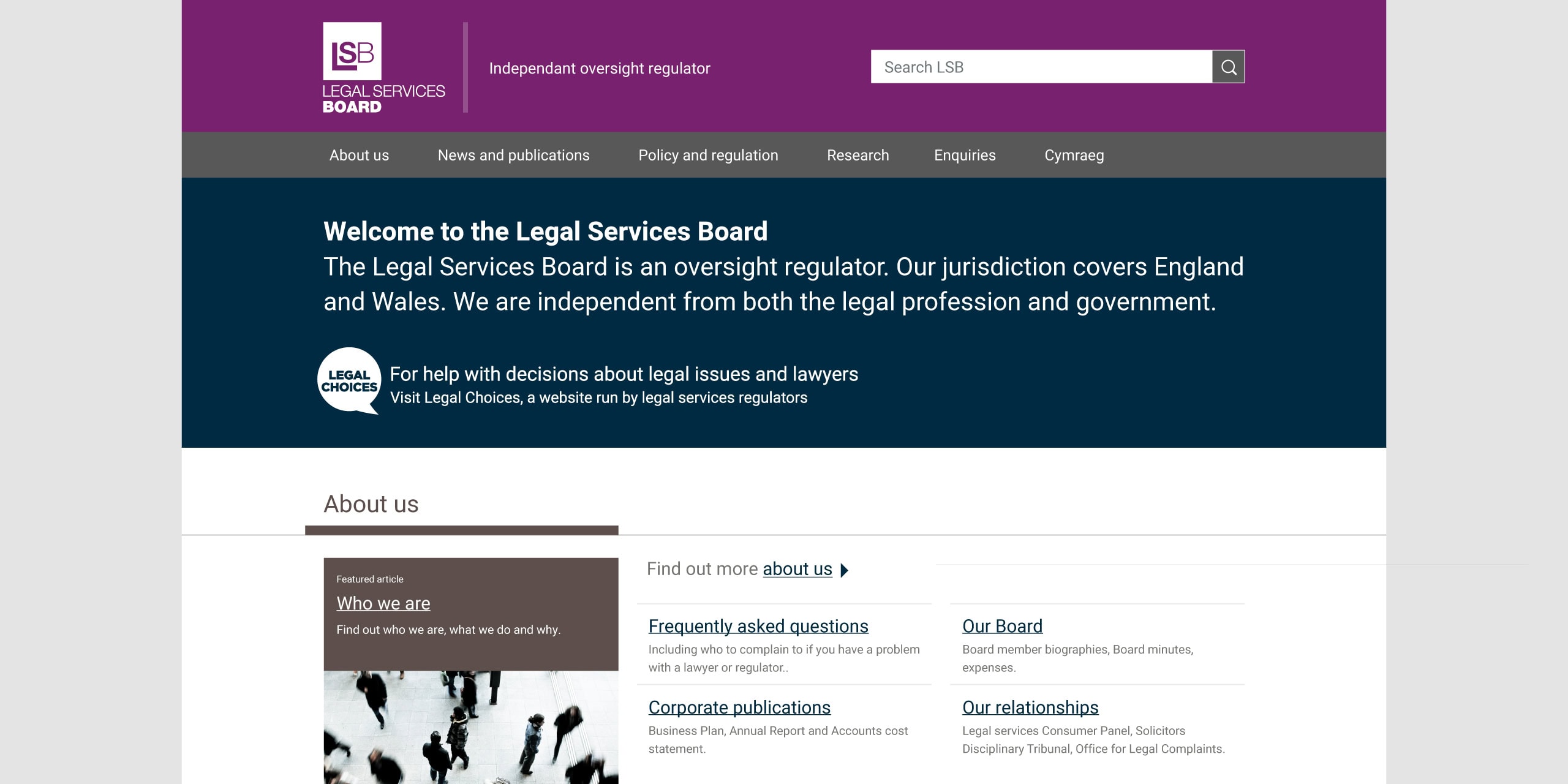
Legal Services Board website homepage showing welcome message and main navigation
Overhead view of people walking across a tiled public concourse
Brand colour palette with vertical blocks of navy, yellow and purple
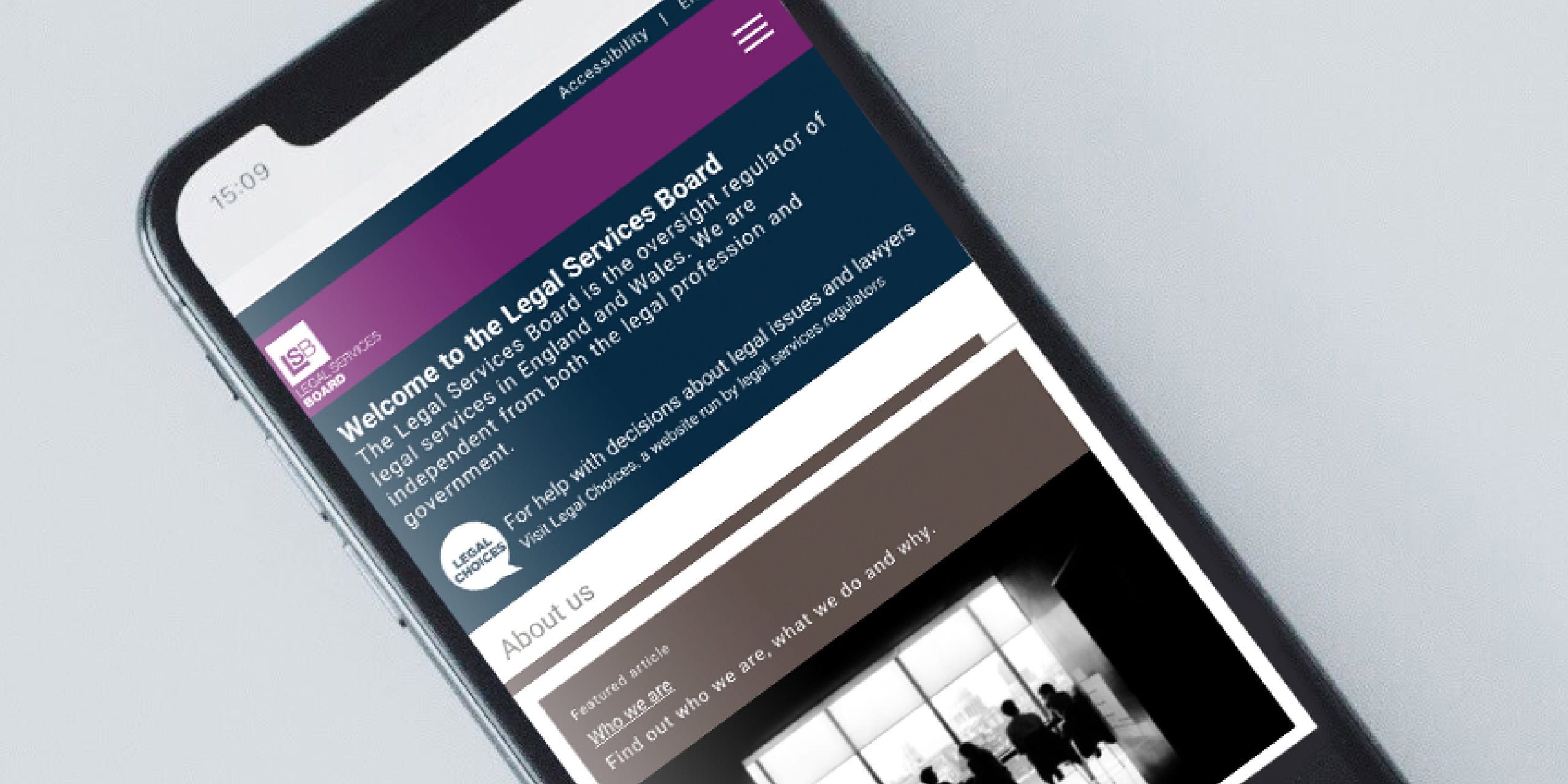
Mobile view of the Legal Services Board website on a smartphone screen

Insight

In the legal sector, trust is everything. Your website has to feel credible, calm and straightforward — which is why law firm website design (and legal sector web projects more broadly) needs a strong end-to-end user experience as standard.

For the Legal Services Board, the brief went further than good UX. They needed a legal services website that actively complies with digital accessibility standards, meeting WCAG 2.1 Level AA. That meant designing and developing a site that works for as many people as possible — including users with visual impairments, limited mobility, neurodiversity, or those using assistive technologies, older devices, or different browsers.

Accessibility isn’t a bolt-on. It shapes every decision: structure, navigation, typography, colour, forms, and the way the site is built.

Website design

To meet accessibility requirements, we approached the design from the ground up — creating a clean, precise interface where clarity and usability lead.

Key considerations included:

→ Colour contrast and legibility: the palette was built to meet contrast requirements, improving readability for users with visual impairments.

→ Clear hierarchy and layout: consistent headings, spacing and predictable content patterns help users scan quickly — critical for information-heavy pages.

→ Screen reader-friendly structure: templates were planned around semantic structure and correct tagging so content is properly understood by assistive tech.

→ Accessible forms and interactions: clear labels, helpful validation, and no “mystery” errors — making journeys easier for everyone.

→ Keyboard-first usability: users can tab through the interface logically, with visible focus states so it’s always obvious where they are on the page.

→ Readable, flexible typography: text remains comfortable to read and supports user-controlled resizing without breaking layouts.

As the oversight regulator of legal services in England and Wales, the Legal Services Board website holds a large database of content. That can easily become a labyrinth. As with any Law firm website design project that includes complex service pages, resources, or guidance, the challenge is helping people reach the right information quickly. Careful information architecture and page planning made the structure feel simpler, without stripping out detail.

Web development

A compliant legal services website requires specialist development — not just a good-looking front end. We built the site using accessibility best practice, focusing on robustness, consistency and long-term maintainability.

This included:

→ Semantic HTML and clean templates to support accessibility tools and improve resilience.

→ ARIA landmarks and assistive cues, used carefully and only where appropriate.

→ Accessible components (navigation, pagination, accordions, forms) built to behave predictably.

→ Real-world testing including keyboard-only use and assistive technology behaviour — going beyond automated audits.

→ CMS-friendly patterns so content editors can publish confidently without unintentionally breaking accessibility.

If you’re reviewing Law firm website design or need a modern legal services website that’s clear, credible and compliant, we can help you plan and build something that works properly for every user.


Written by Jane Comar + Reviewed by James Hofton

Last updated: January 14, 2026

Get in touch


Talk to us about your next project. We’d love to hear from you.